Crates at Six, Crackle by Nine: The Making of Stapleford's Weekly Market
5.50am: The first tailgate
The square is still a square. Grey tarmac, a few gull shadows, the low hum of a fridge van that has beaten the sun. Dave is already there, reversing a flatbed into the spot he has used for eleven years. He does not need the lines. His van knows the lines.
'You learn the order,' he says, sliding out a ramp with a clatter that echoes off the shutters. 'Crates first, then the awning, then the sign. If you do the sign first, you're just a man standing in the dark with a sign.'
By ten past six, three more vans have arrived. A woman in a padded coat is unloading trays of eggs with the careful rhythm of someone who has dropped a tray before and does not intend to repeat the experience. A younger trader is wrestling a gazebo frame that seems to have a personality. Nobody is rushing. Nobody is chatting much, either. This is the hour for doing, not talking.
6.40am: The geography of a good pitch
There is an unwritten map of the square, and it has nothing to do with the painted lines. The cheese van goes near the corner because the corner catches the morning sun and cheese, apparently, does not like to be cold and gloomy. The plant stall takes the middle because people like to browse plants slowly, and the middle is where browsing happens. The pie man is beside the plant stall because — well, because he always has been.
'It's not random,' says Margaret, who has been selling preserves here since before the bunting was a thing. 'You put the heavy stuff near the road so people can carry it back to the car. You put the flowers where they catch the eye. And you never, ever put a stall selling hot drinks next to a stall selling fresh fish. That's just common sense.'
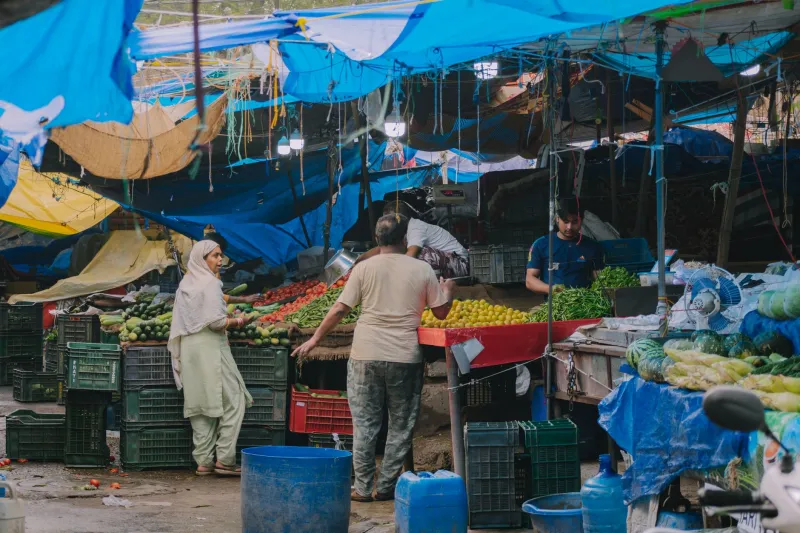
By seven, the square has stopped being a square. It has become a small town of canvas and crates, with streets and neighbours and a gentle hum of activity. The first customers are already drifting in — the early birds, the dog walkers, the people who like to get their shopping done before the world gets loud.
8.15am: Bacon, bickering and the breakfast window
The bacon van is the closest thing the market has to a town crier. By half past eight, there is a queue that curls past the charity stall and a smell that could wake a hibernating hedgehog. Inside, two people are working a griddle with the focus of air traffic controllers. Outside, a man in a flat cap is explaining to anyone who will listen that the queue used to be shorter when the van was parked the other way round.
'It's the same length,' says the woman behind him, not unkindly. 'You just notice it more because you're facing the bakery.'
This is the social heart of the market. The bacon rolls are good, but they are not the point. The point is the standing about, the nodding at neighbours, the low-grade bickering about parking that passes for conversation in a place where everyone knows everyone's business but is too polite to mention it.
9.30am: The stalls worth queueing for
If you are coming down for the first time — or the first time in a while — here is a short, entirely unscientific guide.
The egg stall. The queue moves fast, but it exists for a reason. The eggs are dark-yolked and the woman selling them will tell you exactly which hen laid them and what mood she was in. Buy a dozen. Buy two.
The pie man. He sells out by eleven. If you want the steak and ale, you need to be there by half nine. If you want the cheese and onion, you can be a bit later, but not much. He does not do cards. He does do a look of mild disappointment if you ask.
The plant stall. Even in winter, there is something worth taking home. Last week it was hellebores. This week it is a tray of tiny cyclamen that look like they have been knitted by a patient aunt. The woman running it will tell you exactly where to put them and exactly how to kill them, which is more honesty than most garden centres manage.
The cheese van. The queue is long, the samples are generous, and the man behind the counter will let you try three different cheddars before you commit. It is a good way to spend ten minutes.
The charity stall. Not a queue, exactly, but a gathering. Books, jigsaws, the occasional piece of mysterious kitchen equipment. All proceeds go to something local. You will leave with a novel you did not know you wanted and a strong urge to explain the plot to someone.
12.10pm: The quiet maths of a winter market
By midday, the market has settled into its rhythm. The early rush is over. The lunchtime browsers are arriving. The traders are doing the quiet maths of the day — how many crates left, how many hours until pack-down, whether it is worth nipping to the café for a cup of tea.
It is harder in winter. The cold keeps some people at home. The dark comes early. The costs — pitch fees, fuel, stock — do not go down just because the weather does. And yet they keep coming, week after week, because this is not just a job. It is a habit, a community, a small act of stubbornness in a world that keeps telling us to click and collect.
'You don't do this for the money,' says Sam, who sells bread and pastries from a stall that always smells like the best part of a Sunday morning. 'You do it because if you don't, the square is just a square. And nobody wants that.'
3.45pm: The last crate
The light is going. The bunting — strung up at nine, taken down at three — is already folded away. The vans are reversing out, one by one, in the same order they arrived. The square is returning to being a square.
But not quite. There is a scattering of cabbage leaves, a chalk mark where the pie man's sign stood, a faint smell of bacon that will linger until the rain comes. And there is Margaret, doing a final sweep with a broom that has seen better days, humming something that might be a hymn or might be a radio jingle.
'Same time next week,' she says, not as a question.
Same time next week. Bring a bag. Bring a tenner. Bring a neighbour. The market does not run itself. But it runs for you.