Tied With String: A Walkable Route Through Stapleford's Free-Wrapping Shops

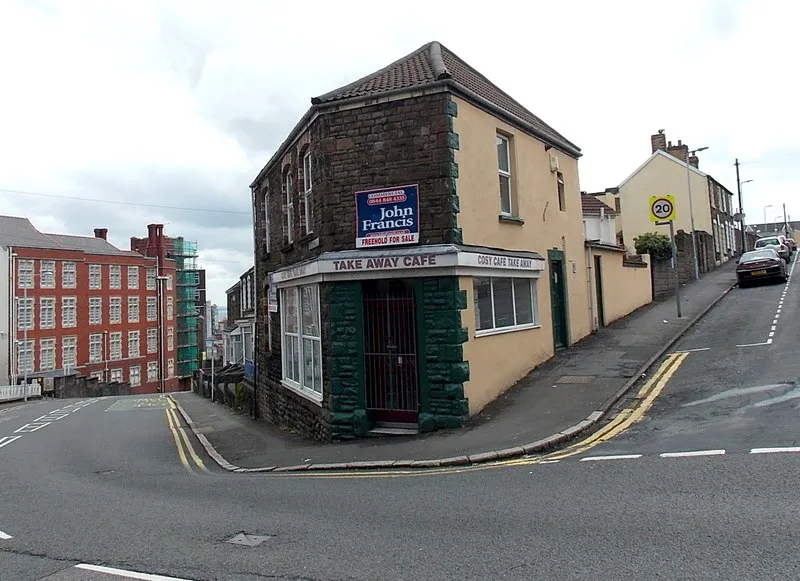
Photo: Humphrey Bolton , CC BY-SA 2.0, via Wikimedia Commons
There is a particular sound a good present makes when it lands on a shop counter in December. The soft thump of a paperback. The clink of a bottle. The rustle of a shopkeeper already reaching under the counter for the paper before you've finished saying please.
In plenty of places that sound now ends with a card machine and a carrier bag. In Stapleford, if you know which doors to push, it ends with string.
The small print, before we start
Free wrapping is not a service you can rely on the way you rely on a bus timetable. It is a favour with a rhythm to it. Some shops wrap almost anything; some wrap if you ask nicely and they aren't three deep at the till; one or two will only wrap something that genuinely deserves the effort. None of that is stinginess. It is arithmetic — paper, tape and six minutes of a shopkeeper's afternoon all cost money, and December has a habit of arriving faster than the invoice does.
So treat it as a courtesy rather than a right, and the whole thing works beautifully.
The route, roughly
The full circuit is about a mile and a half, and you can do it in an afternoon without once needing to move the car. Start at the Nottingham Road end, work up through Church Street, loop round by Victoria Street, and finish near Derby Road with something hot in your hand. Allow two hours if you're browsing, three if you're the sort of person who reads the back of every book.
Stop one: the butcher with the rosemary
Hartley's, on the Nottingham Road stretch, is the spiritual home of the free wrap. A ham, a box of sausage rolls, a decent bit of beef for the twenty-fifth — it all goes into brown paper, gets a fold that looks effortless and isn't, and is finished with butcher's string and a small sprig of rosemary tucked under the knot. The rosemary is not a gimmick. It is the shop's entire personality in one herb.
Go before eleven on a Saturday if you can. After that, the queue is out of the door and nobody is going to begrudge a butcher who'd rather serve people than tie bows.
Stop two: the drawer of rescued ribbon
Pell's, the bookshop on Church Street, keeps a shallow drawer behind the counter that is one of the small wonders of the town. Inside is ribbon — sorted, loosely, by colour — most of it rescued from hampers, hotel boxes, wedding favours and one memorable delivery of sherry. Nothing matches. Everything works.
Ask for a book to be wrapped and you'll get brown paper, a length of something dark green, and a knot that doesn't pretend to be decorative. They will not, however, wrap a book you bought somewhere else. Fair enough. There are limits, and this is a reasonable one.
Stop three: paper bought is paper earned
The haberdashery on Victoria Street operates on a simple, honest trade. Buy your paper and tags there — and it's good paper, the thick sort that doesn't split at the corners — and they'll wrap your purchases for nothing. Turn up with a bag of things from elsewhere and a hopeful expression, and you'll be met with a very polite explanation of how the arrangement works.
It's the most straightforward deal on the route, and arguably the fairest.
Stop four: waxed paper and garden twine
The deli near Derby Road wraps cheese in waxed paper and ties it with twine, which is either the most romantic thing in Stapleford or the most practical, depending on how hungry you are by four o'clock. Either way, it looks like a present rather than a purchase, which is the entire point.
Stop five: the wildcard
Every good route needs one. The hardware shop will wrap almost anything, cheerfully, but will also tell you — with genuine concern — if what you've chosen looks like a plunger. Take the advice. Buy the better thing. Get it wrapped.
The unwritten rules
Nobody has written these down, and yet everybody seems to know them.
- Buy first, ask second. The wrapping is a thank-you for the purchase, not a standalone service.
- Keep the receipt out of the parcel. Shops will hand it to you separately without being asked. That's the signal.
- Two or three items, not twelve. A shopkeeper will wrap a family's worth of gifts if you're a regular and it's quiet. They will not enjoy eight identically sized boxes in the last week of term.
- Ask before four o'clock. Late afternoon in December is a sprint, not a chat.
- Bring your ribbon back. More than one shop on this route takes returned ribbon and reuses it. Nobody will think it odd. Quite the opposite.
- Don't turn up on Christmas Eve expecting origami. On the twenty-fourth you are buying, not commissioning.
- Say thank you, and come back in January. That's the whole payment.
Why they still bother
It would be easy, in 2026, to stop. Paper has gone up, tape has gone up, and the minutes add up across a season. Several shopkeepers will tell you, if pressed, that free wrapping is not a line on a spreadsheet they can defend to an accountant.
What they say instead is that it is the last thing a customer sees of them. A parcel carried onto a bus, sat on a kitchen table, handed over on Christmas morning — that's advertising you can't buy, and it costs a sheet of brown paper. It also, quietly, marks the difference between a shop and a website. The website will deliver it in a box. The shop will tie it.
Timing it right
The sweet spot is roughly the second week of December, when the stock is in but the panic hasn't arrived. Midweek mornings are calmest. If you're doing the full walk, do it on a dry day — brown paper and drizzle are not friends, and every shop on this route will say so as they hand it over.
After the twentieth, adjust your expectations. Buy what you need, take the bag, and wrap it at home with the radio on. The shops will still be there in January, and so, hopefully, will the string.